
MOTORBIKE MECHANIC BASICS FOR YOUR VIETNAM MOTORBIKE TOURS
Manual clutch touring bikes are not commonly used in Vietnam. Around 90% of motorcycles are either automatic or semi-automatic. In addition, while most local mechanics are honest and reliable, as in any country, a small number may not be trustworthy. This is simply part of traveling and cannot always be avoided.
Having a basic understanding of motorbike mechanics can therefore be very useful and help you handle minor issues during your journey. Vietnam Motorbike Rental provides a few essential tips, advice, and basic information about our rental bike fleet to help you prepare.
We supply a basic tool kit, spare inner tubes, spark plugs, cables, and brake shoes where appropriate. A standard kit – typically including inner tubes and cables weighing around 2–3 kg – will be provided when you collect your motorcycle(s).
Additional spare parts can be supplied upon request, as some riders may not feel confident performing even simple repairs. For this reason, carrying unnecessary tools or parts is not always recommended. Tool kits are provided only for riders who are comfortable handling basic mechanical work. Otherwise, there are many reliable repair shops available along the route throughout Vietnam.
Understanding the Requirements for Motorcycle Repairs
First and most importantly, you need to be clear about what you are getting into. It is essential to understand how to identify problems, as well as how to repair, maintain, adjust, and test the key components of a motorcycle.
General Problems
Some of our touring motorcycles still use carburetors. Fuel injection systems are becoming more popular.
If you have difficulty starting the bike in the morning, especially on cold days, please use the choke. Once the engine starts, gently hold the throttle to warm up the engine and gradually increase the revs. When the engine idles smoothly, turn the choke to the off position. Normally, the choke positions are: bottom = off, middle = half, and top = full choke. Please note that some riders forget to turn off the choke, which can cause overheating and damage to engine components.
If the engine stops while riding, pull in the clutch and shift into 3rd or 4th gear, then slowly release the clutch to attempt a restart. If the engine starts again, continue riding as normal. If not, safely pull over to the right side of the road and check the ignition and fuel supply.
You usually do not need to remove the spark plug, as the engine may still be very hot. If necessary, use a spare spark plug for quick testing. If there is ignition but the engine still does not run properly, check the fuel level. When switching from “ON” to “RESERVE,” make sure to refuel at the nearest petrol station as soon as possible.
If the bike still cannot be started, take it to the nearest motorcycle repair shop (sua xe may) and contact us immediately. In some cases, the issue may be more complex, such as a dead battery, faulty alternator, worn spark plug, ignition coil failure, control module issues, or even contaminated fuel.
Popular Issues
Flat tires are the most common problem encountered on the road. Please use the inner tubes, tool kit, and pump provided (available on request) to replace the damaged tube. If you are unable to fix it yourself, ask a local for assistance or push the bike to the nearest motorcycle repair shop.
Be aware that many mechanics in Vietnam tend to inflate tires to higher pressures than recommended (often 4-5 kg/cm² or even more). Please ensure the correct pressure is maintained at around 2 kg/cm² (approximately 33 psi), as overinflation may cause the inner tube to burst.
Replacing a snapped cable is relatively simple, but you need to know how to do it. We will show you how if you have never done it before. Although cable failure can be inconvenient, it is relatively rare during tours.
Daily Checks and Maintenance
Regular daily checks and basic maintenance are very important for a safe and smooth journey.
All touring motorcycles require daily chain lubrication. This can be done once a day, ideally in the morning. The easiest option is to have it done at a local mechanic shop, typically costing around 10,000 – 20,000 VND per bike. If chain adjustment is required, the cost is usually around US$1 per bike.
Engine oil is equally critical. If the oil level is low, the engine may produce unusual noise due to poor lubrication and, in severe cases, may suffer serious damage. Always check the oil level using the dipstick or window and ensure it is within the recommended range.
Engine oil should be changed every 1,000 – 1,500 km, which can be conveniently done at any local motorcycle repair shop (sua xe may).
Stops
Last but not least, it is recommended to stop every hour for about 10 minutes to rest, refresh yourself, and allow the engine to cool down. Our touring motorcycles include both air-cooled and water-cooled models.
In practice, most riders naturally stop more frequently – often every 30 minutes or less – for photos, directions, or short breaks along the way.
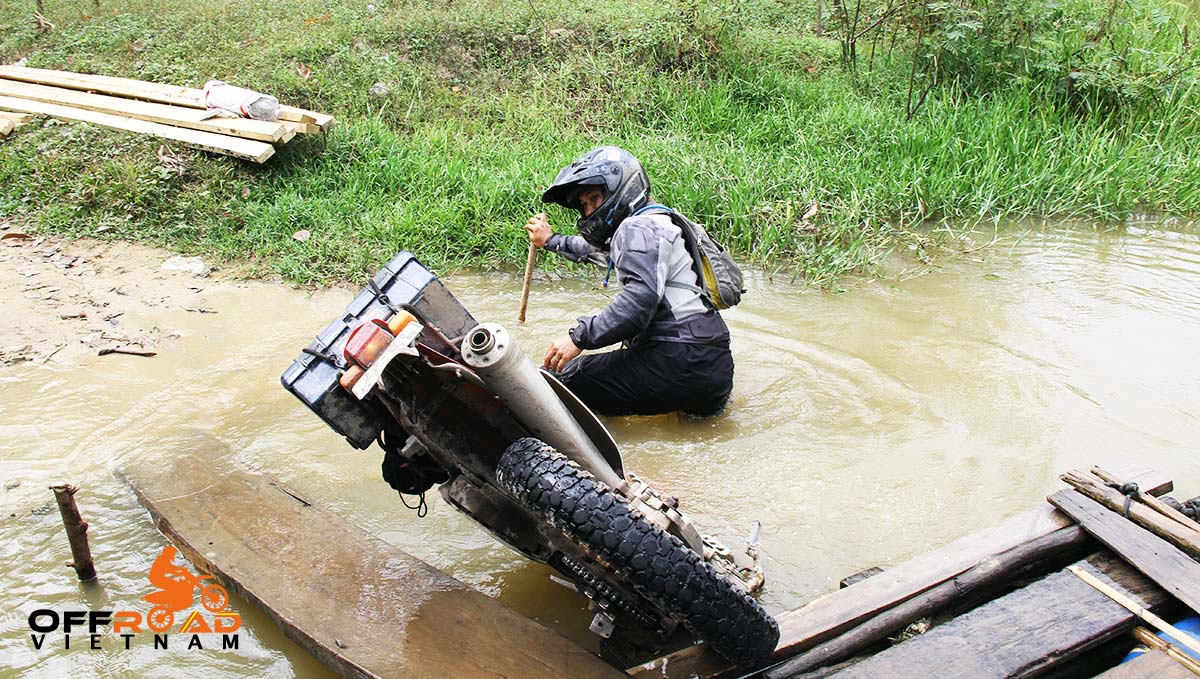
For more information about motorbike mechanic basics for your Vietnam motorbike tour, please feel free to contact us.
Other Essential Things
Safety riding gear
Motorbike lesson
Driving license
Insurance
Things to bring
Terminology
Travel documents

Leave A Comment